
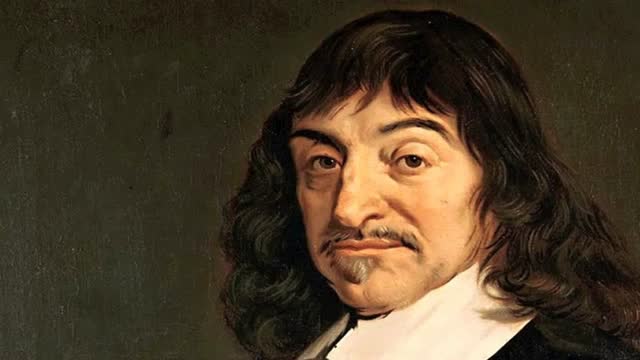
Traditional epistemology
Epistemology is the area of philosophy that seeks to answer questions about our knowing, how that knowing is justified, and how grounds for justification are established. Epistemological naturalists often use the phrase traditional epistemology to describe the Cartesian tradition of philosophical inquiry, which began by asking epistemological questions prior to any other philosophical questions. Following Descartes, both early modern Rationalists and Empiricists employed a foundationalist strategy, coupled with a methodology modeled on mathematics, to answer their epistemological questions.
In On Epistemology, Linda Zagzebski writes that traditional epistemology is concerned with answering three central questions:
- What is knowledge?
- Is knowledge possible?
- How do we get it?(1)
She states that one’s epistemology will be very different depending on the relative order and emphasis one places on these questions. Some philosophers insist that knowledge must be defined before proceeding to questions 2 and 3. However, debates about the precise definition of knowledge are notoriously endless, resulting in some definitions of knowledge so stringent that none of man’s cognitive activities seem adequate to obtaining it. Therefore, answering 1 first could lead to not asking either of the other two questions at all. Other philosophers avoid the morass of question 1 completely, assert that humanity clearly possesses knowledge, and go on to work out how it is acquired. Whatever the arrangement, Zagzebski’s point is well taken: the order in which one attempts to answer these central questions of the discipline will shape the content and the structure of one’s epistemology.
Others philosophers characterize traditional epistemology similarly. Harvey Siegel describes traditional epistemology in much the same terms as Zagzebski, but frames them as concerns rather than questions (2). Siegel concludes that philosophers engaged in traditional epistemology, including Jaegwon Kim, Susan Haack, and Barry Stoud agree about the central concerns. “While these and other authors emphasize different aspects of traditional epistemology, all are agreed that it involves identifying and spelling out criteria of epistemic justification; justifying (or ‘ratifying’) those criteria; determining, by reference to those criteria, what we know; and responding to the skeptical challenge to the possibility of our knowing anything at all (3).”
Jaegwon Kim deepens the sense of the centrality of epistemic justification for traditional epistemology (4). Kim claimed that justification is the central concept and that epistemology ceases to be epistemology without justification.
We can summarize our discussion thus far in the following points: that justification is a central concept of our epistemological tradition, that justification, as it is understood in this tradition, is a normative concept, and in consequence that epistemology itself is a normative inquiry whose principal aim is a systematic study of the conditions of justified belief. I take it that these points are uncontroversial, although of course there could be disagreement about the details… […] If justification drops out of epistemology, knowledge itself drops out of epistemology. For our concept of knowledge is inseparably tied to that of justification. (5)
However, the study of human knowing has not always placed these particular questions and concerns at the center of philosophy. The central questions and concerns of traditional epistemology originate in the philosophy of René Descartes, who was motivated by a specific set of historical and philosophical concerns.
The epistemological turn
Descartes felt compelled to refound philosophy due to the philosophical confusion that had developed in the preceding several centuries. Speaking of his dissatisfaction with his own education, Descartes recalls,
Regarding philosophy, I shall say only this: seeing that it has been cultivated for many centuries by the most excellent minds and yet there is still no point in it which is not disputed and hence doubtful, I was not so presumptuous as to hope to achieve any more in it than others had done. And, considering how many diverse opinions learned men may maintain on a single question – even though it is impossible for more than one to be true – I held as well-night false everything that was merely probable. As for the other sciences, in so far as they borrow their principles from philosophy I decided that nothing solid could have been built upon such shaky foundations. (6)
The rise of mendicant orders and the rediscovery of Aristotle’s works in the 13th century challenged the well-established traditional of philosophical inquiry. While the mendicant orders looked to the Bible as the authority for understanding God, creation, and our place within it, the Aristotelian corpus presented a hitherto unfamiliar and detailed examination of the natural order. Platonists, Latin Averroists, and Thomists debated over the proper reconciliation of these seemingly divergent viewpoints (7). Additionally, the nominalism of William of Ockham ruptured the centuries old scholastic consensus regarding metaphysics. Ockham denied the existence of universals and asserted the radical individuality of all beings, which undermined the hierarchically structured, rational order of the cosmos. With metaphysics generlis and specialis torn apart by the nominalist thesis, new philosophies clashed over which part of existence should be given metaphysical and methodological priority: God, man, or nature (8).
Given the philosophical tumult, Descartes wanted to rebuild philosophy in order to provide certitude worthy of the name scientia. He did so by upending the relative order of philosophical questions established by the scholastic tradition of inquiry.
Pre-Cartesian philosophy is best described by the term Metaphysical Realism. Metaphysical Realism is a viewpoint that prioritizes questions of being, or things, rather than questions of knowledge, and expounds a theory of knowledge within an antecedent metaphysical and psychological framework. As Zagzebski put it,
If you imitate the ancient and medieval philosophers and begin metaphysics before doing epistemology, you would normally expect to treat knowledge as something that comes out of a study of human nature. What we call “knowledge” is the product of cognitive interaction with the world when all goes as it should. According to that approach, it makes more sense to investigate how the world is put together and our place in it before asking what knowledge is. (9)
Descartes inverted the established ordering by beginning his philosophy with the epistemological questions. He prioritized concerns about knowing over being, even if only methodologically. More specifically, Descartes sought to establish the justificatory criteria for beliefs prior to making the sorts of metaphysical claims about which there had been so much debate and confusion in the preceding centuries. His chosen ordering of philosophical priorities initiated an epistemological turn for western philosophy and contributes to his attribution as the father of modern philosophy.
Notes
- Linda Zagzebski, On Epistemology, p. 1.
- Harvey Siegel, “Naturalized Epistemology and First Philosophy,” pp. 46 – 62.
- ibid., p. 50.
- Jaegwon Kim, “What is ‘Naturalized Epistemology’?,” pp. 381 – 405.
- ibid., p. 383.
- René Descartes, “Discourse on the Method,” p. 114 – 5.
- Josef Pieper, Guide to Thomas Aquinas, 30 – 53.
- Michael Allen Gillespie, The Theological Origins of Modernity, p. 16.
- Zagzebski, On Epistemology, p. 2.
 Dissertating Outloud
Ahh, good old epistemology…the hardest philosophy class I have taken in college as of now. Humian skepticism was the one that confused me the most!
LikeLiked by 1 person
Hume’s not easy to understand, that’s for sure. In my next post, I will put him in context historical context and talk about his epistemology in relation to Descartes and Hobbes. I hope that will help!
LikeLiked by 1 person